Fire-Safe Dryer Vents · Clarksville, TN
Dryer Vent Cleaning in Clarksville, TN: Fire-Safe Vents
Full duct cleanout, airflow tested before and after, and unsafe vents rerouted right. Failure to clean is the leading cause of dryer fires. Once a year keeps you safe.
Serving Clarksville & Montgomery County · Mon-Fri 7AM-7PM · Sat 8AM-4PM · 24/7 Emergency Line
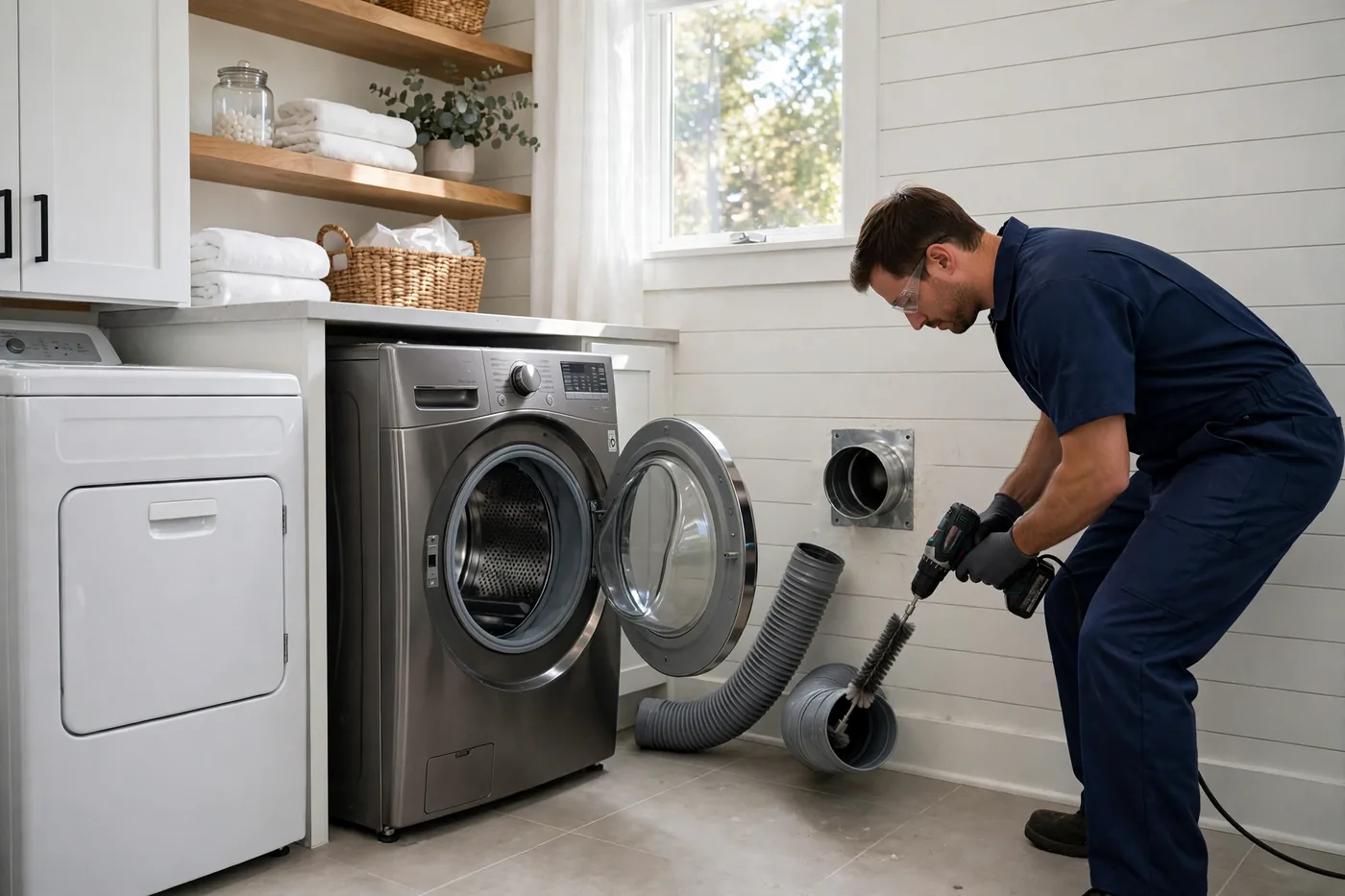
Clarksville Dryer Vent Cleaning
The Lint Trap Only Catches Half of It.
Short answer: every load pushes fine lint past the trap and into the duct, where it packs tighter month by month. That buildup does three things: it makes drying take longer, it pushes humid air back into your laundry room, and it creates a fire risk, because lint is flammable and a restricted vent traps heat right where the lint collects. A professional cleanout once a year, more often if drying slows down, keeps all three from happening.
The national numbers are worth knowing, because they show how serious a clogged vent is. The NFPA reports that about 15,970 home fires per year involve a clothes dryer or washing machine nationally, with 92% of those involving dryers, and failure to clean is the leading cause at roughly 32% of dryer fires. Those are national figures, not Clarksville numbers, but the mechanism is identical in every laundry room: lint plus trapped heat. The NFPA's own guidance is simple: clean lint out of the vent pipe once a year, or more often if drying takes longer than normal.
In Clarksville, we see the comfort side of the same problem just as often. Tennessee's humid subtropical summers mean your laundry room is already fighting moisture, and a clogged vent sends the dryer's hot, wet exhaust back into the room instead of outside. The result is a muggy laundry room, longer dry times, and conditions where mold can grow around the vent run. One cleanout fixes the safety problem and the comfort problem together.
What's Included in Our Vent Cleaning
- Full duct run cleaned from the dryer to the outside cap with rotary brush tools
- Lint trap housing and the transition duct behind the dryer cleared
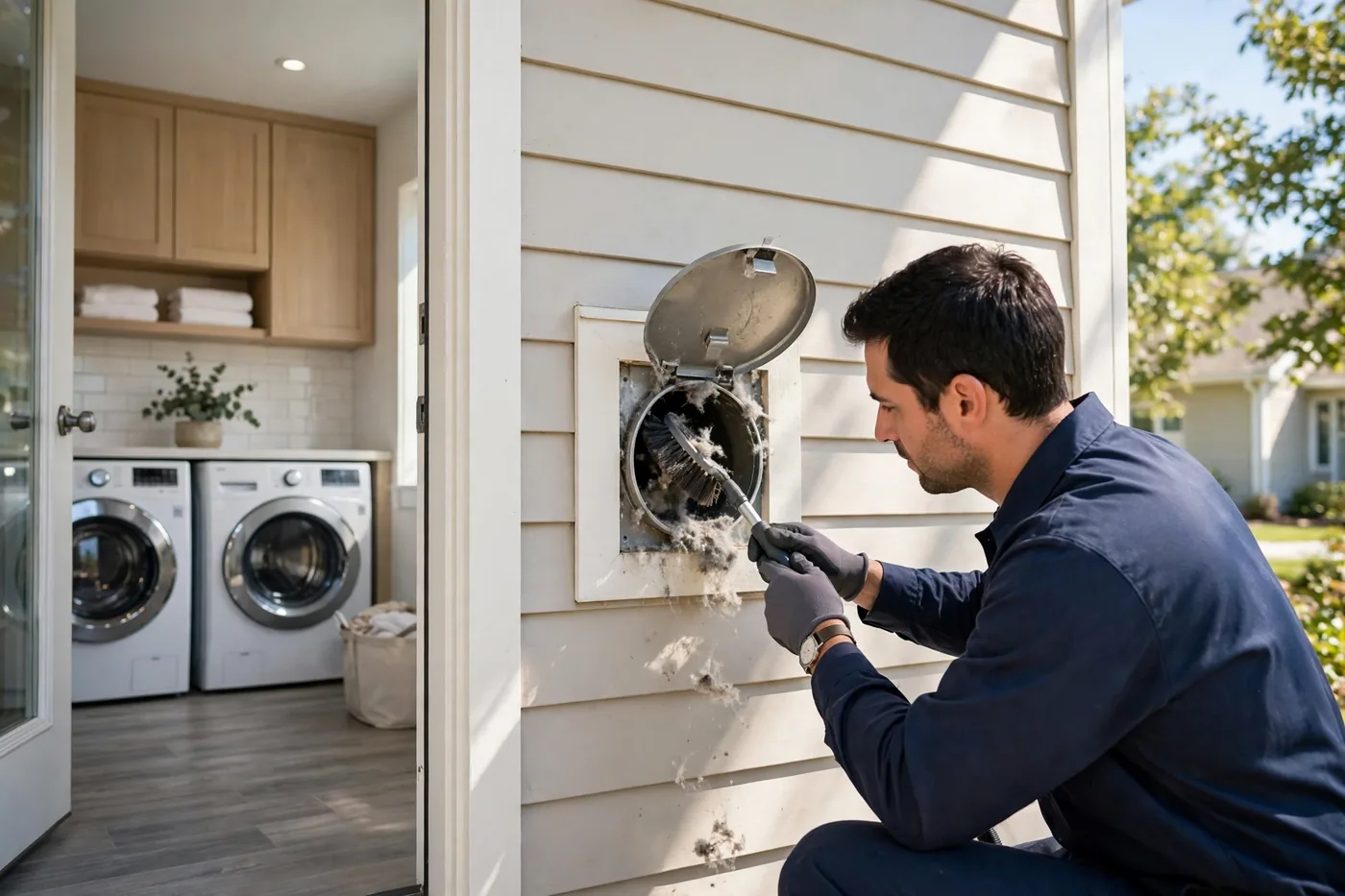
- Exterior wall cap inspected, cleaned, and checked for proper flap operation
- Duct material checked (flexible plastic and foil duct get flagged for replacement)
- Airflow measured before and after, so you can see the improvement
- Vent route assessed for length, kinks, and bad terminations
- Rerouting or rigid-metal upgrade quoted separately if the install is unsafe
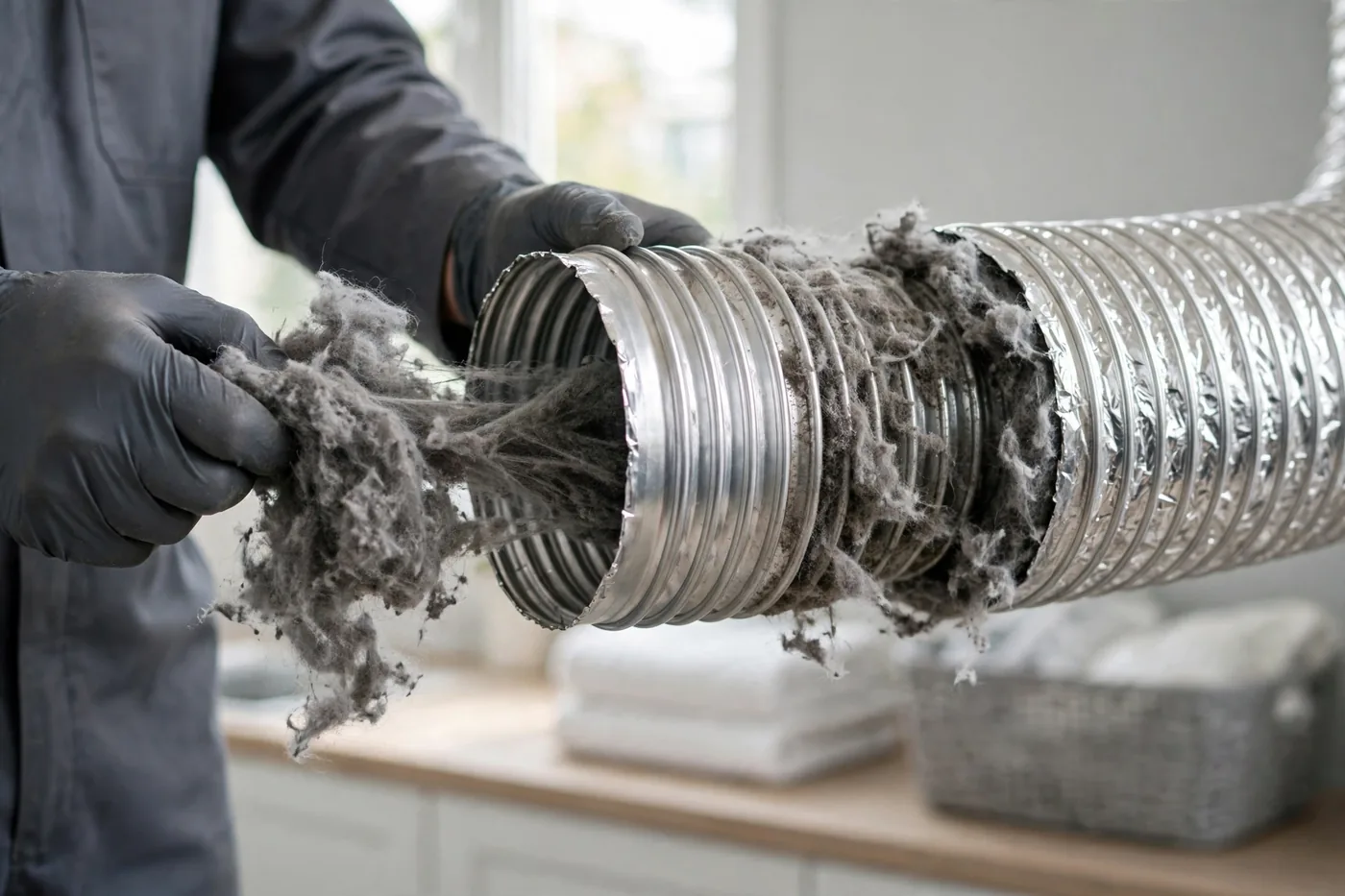
About those bad installs: we see plenty of them. Flexible plastic or foil accordion duct, which crushes and catches lint. Vent runs that terminate into an attic or crawlspace instead of outside, which is just pumping moisture into the house. Exterior caps that are painted shut, crushed by landscaping, or blocked by a bird nest. Newer subdivisions in Sango and along the Rossview corridor sometimes have long runs routed through walls and attics that are marginal from day one. If your vent needs rerouting or an upgrade to rigid metal duct, we quote it as its own job and you decide. For the full safety picture, the NFPA's dryer fire research report is the authoritative read, and our guide on how to clean your dryer vent safely covers what you can do yourself between professional visits.
A practical note for homes near Fort Campbell and across Montgomery County's rural edge: larger lots often mean longer vent runs to reach an exterior wall, and longer runs clog faster. If your laundry room sits in the middle of the house, your vent is probably working harder than you think. That's a good reason to be on the annual schedule rather than waiting for symptoms.
Don't Ignore These
Signs Your Vent Needs Cleaning
Drying takes longer than it used to
The number-one symptom. Clothes need two cycles, or they come out damp when the timer says done. A clogged vent can't push heat and moisture out, so the dryer runs and runs without finishing the job.
Laundry room goes hot and muggy
Hot, humid air in the laundry room while the dryer runs means exhaust is finding its way back inside. In Tennessee's humid summers this adds moisture problems on top of the drying problem.
Burning smell or very hot dryer top
A dryer that's hot to the touch or smells scorched is overheating, and trapped lint plus trapped heat is exactly the combination behind dryer fires. Stop the dryer and call us any hour.
Upfront & Simple
How a Vent Cleaning Visit Works
Airflow measured first
We check airflow at the outside cap before touching anything, so we know how restricted the run is and can prove the improvement after.
Full run brushed out
Rotary brush tools run the whole duct from the dryer to the cap, plus the lint housing and the transition duct behind the machine.
Cap and duct inspected
The exterior cap gets cleaned and checked, and we flag unsafe duct materials, dead-end runs, or terminations that dump moisture indoors.
Proven and scheduled
Airflow measured again after cleaning, dryer test-run to confirm. We note the condition so you know when the next cleaning is due.
Why Clarksville Calls Us
A Cleanout That's Actually Complete
Full run, not just the ends
We brush the entire duct from the dryer to the outside cap. Cleaning only the first three feet leaves the real blockage where it is.
Airflow measured, before and after
You get a real before-and-after reading, not just our word that it's cleaner. The numbers tell the story.
Bad installs get flagged honestly
Plastic duct, attic dead-ends, crushed caps: we show you what we found and quote the fix separately. No pressure, just the facts.
Honest Pricing
What We Check on Every Vent Cleaning
Here's the checklist your technician works through. Every item gets a yes or no, so nothing is left to assumption:
| Check | What we look for | Why it matters |
|---|---|---|
| Duct material | Rigid metal vs. flexible plastic or foil | Flexible duct crushes and traps lint |
| Run length and bends | Long runs and sharp elbows | Each bend cuts airflow and collects lint |
| Termination point | Must exit to the outdoors, not an attic or crawlspace | Indoor termination pumps moisture into the house |
| Exterior cap | Flap opens freely, no nests or damage | A stuck cap blocks the whole run |
| Lint housing | Packing around and below the lint trap | The trap misses plenty; this is where it lands |
| Airflow reading | Measured before and after cleaning | Proves the cleanout worked |
Vent cleaning is priced as a straightforward service visit, and we quote it as one firm number before we start. Rerouting or upgrading to rigid metal duct is a separate job with its own quote, only if you want it. Most homes in the 37040 to 37044 ZIPs we serve need nothing beyond the annual cleanout, and we'll tell you when that's the case. If you'd like the full cost picture for all our services, our washer and dryer cost guide has it.
Across Clarksville & Montgomery County
Vent Cleaning Across Town
Sango
Newer subdivisions in the southeast growth corridor, where longer vent runs through walls and attics are common. These runs clog faster and are the first thing we check when drying slows down.
Rossview
The I-24 growth corridor with new construction. Long vent runs are standard here, so we measure airflow at the outside cap on every visit, not just when there's a complaint.
St. Bethlehem
Near Dunbar Cave State Park and the Cumberland River. River-area dampness plus Tennessee humidity makes clogged vents a mold risk here, not just a drying problem. Annual cleaning keeps the moisture going outside.
Good To Know
Dryer Vent Cleaning FAQs
How often should I have my dryer vent cleaned?
The NFPA recommends cleaning lint out of the vent pipe once a year, or more often if drying takes longer than normal. Big households, long vent runs, and dryers that run daily clog faster and may need it twice a year. If your drying times have crept up, that's the vent telling you it's due.
Can a clogged dryer vent really cause a fire?
Yes. National NFPA data attributes about 15,970 home fires per year to clothes dryers and washing machines, 92% of them involving dryers, and failure to clean is the leading cause at roughly 32% of dryer fires. Lint is highly flammable, and a restricted vent traps heat right where the lint collects. These are national figures, but the mechanism is the same in every laundry room.
Does vent cleaning actually help with long dry times?
It's often the biggest single improvement you can make. A choked vent can't push heat and moisture out of the drum, so clothes stay damp no matter how long you run the cycle. After a proper cleanout, most dryers go back to finishing a normal load in one cycle, which also means lower energy use and less wear on the machine.
My laundry room gets humid and muggy when the dryer runs. Why?
When the vent is clogged, hot moist air can't get outside, so it finds its way back into the laundry room instead. In Tennessee's already humid climate, that trapped moisture creates muggy air and conditions where mold can grow around the vent run. Cleaning the duct restores the path outside and dries the room out.
Can you reroute my dryer vent if it was installed badly?
Yes, we offer vent rerouting and upgrades. We see flexible plastic and foil ducts (which shouldn't be used), vent runs that dead-end into attics or crawlspaces, and exterior caps painted or stuck shut. We replace problem duct with rigid metal, reroute to a proper exterior termination, and make sure the path is as short and straight as the house allows.
How long does a dryer vent cleaning visit take?
Most residential vent cleanings take well under an hour. We clean the full run from the dryer to the outside cap, inspect the cap and the duct material, and measure airflow before and after so you can see the difference. If we find a bad install that needs rerouting, we'll quote that separately and you decide.
DIY between visits: read how to clean your dryer vent safely.
Clarksville Washers Repair Pro
Vent Overdue? Get It Cleaned and Proven.
Full cleanout, airflow measured before and after, one firm price.