What Washer & Dryer Repairs Really Cost
Honest ranges, the real repair-vs-replace math, and what moves the price, so you walk into the conversation informed.

"How much will this actually cost me?" is the question behind every call we take, and it deserves a straight answer. So here is our honest position: the ranges below are typical national industry ranges, not our prices. Your exact number comes after diagnosis, in writing, before any work starts. Anyone who quotes a repair price over the phone without seeing the machine is guessing.
Typical national repair ranges
The figures below are what the appliance repair industry commonly sees across the country. Most jobs land somewhere in these bands; your quote will be exact, not a band.
| Repair | Typical national range | Notes |
|---|---|---|
| Diagnostic visit | A modest flat fee | Covers testing and the firm written quote; ask when you call how it is handled |
| Washer repair, overall | $150 to $400 | Most common washer jobs land here |
| Washer drain pump / drive belt | $175 to $325 | The two most common washer part swaps |
| Dryer repair, overall | $100 to $300 | Most common dryer jobs land here |
| Dryer heating element | $150 to $300 | Electric dryers; the classic no-heat fix |
| Dryer vent cleaning | Usually modest | Varies with vent length, bends, and roof access |
| Washer / dryer replacement | Varies widely | Depends on brand, capacity, and features; your tech can run the 50% math with you |
The 50% rule: repair or replace?
This is the rule of thumb customers ask us about most, and we use it too: if a repair would cost more than half of a comparable new machine, replacement usually makes more sense. Add in the machine's age. Washers typically last about 10 to 13 years, dryers about 13 to 14. A $250 fix on a six-year-old washer is an easy yes. The same fix on a twelve-year-old machine that has already needed two service calls is money you are likely throwing after bad.
If you want the full decision walkthrough, see repair or replace your washer and dryer on the blog. And expect honesty from us on this one: if your machine is not worth fixing, we will tell you, even when it costs us the job.
What moves the price up or down
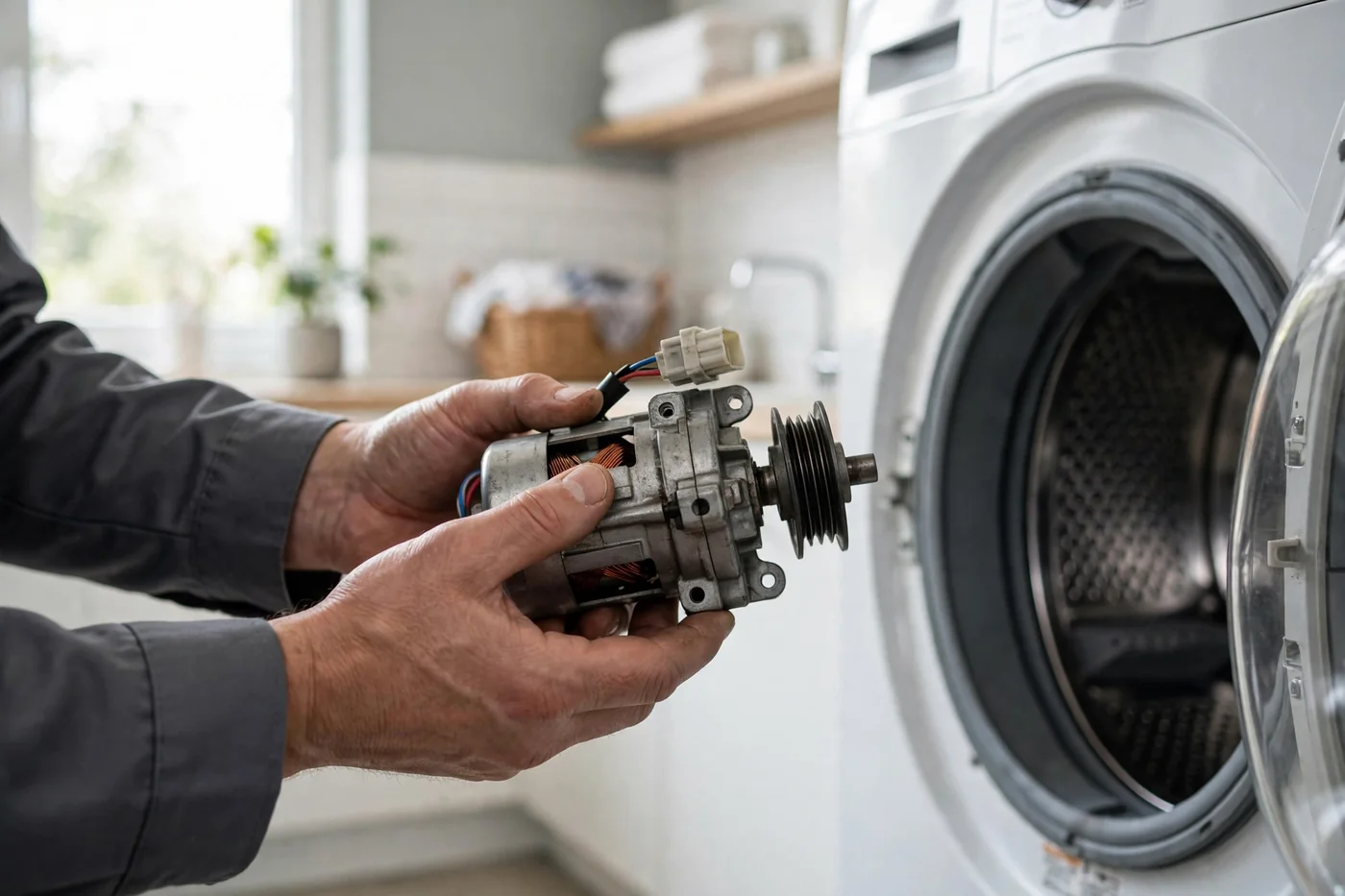
- Part availability. Common pumps, belts, and elements are quick and affordable. Rare or discontinued parts take longer to source and cost more, especially on older machines.
- Gas vs. electric. Gas dryers have an ignition system, flame sensor, and gas valve coils that electric dryers do not. More parts to test, gas-safe procedures, and a longer diagnosis, which shows up in the quote. See our gas dryer repair page for what that involves.
- Vent routing. A short straight vent to an outside wall is quick to clean. A long run with bends or a roof exit takes more time and equipment. The same goes for repair access in tight laundry closets in older downtown Clarksville homes.
- Stacked units. Stacked sets common in newer Sango and Rossview builds need the dryer unstacked to reach some washer parts, which adds labor time versus side-by-side units.
- Multiple failures. A machine that has been limping along, like a dryer run on two cycles for months, often has a primary failure plus worn secondary parts. Catching problems early is the cheapest strategy there is.
What you will actually pay us
One number, in writing, before any work starts. That number covers the diagnosis, the parts, and the labor, and it does not move unless the scope changes and you approve the change. If you decline the repair, you only owe the diagnostic visit fee. Our repair process walks through exactly how that conversation goes.
Cost questions we hear a lot
Why can't you just give me a price over the phone?
Because a symptom can have several very different causes. A washer that will not drain might need a fifteen-minute hose fix or a new drain pump, and quoting blind would mean either overcharging you or eating the difference. Diagnosis first, then an exact written price, is the only honest way to do it.
Is the diagnostic fee credited toward the repair?
Ask when you call. We will tell you the diagnostic fee, how it is handled if you approve the repair, and what happens if you decline, all before you book. No fine print, no surprises on the invoice.
At what point should I replace instead of repair?
Use the 50% rule as a starting point: if the repair would cost more than half of a comparable new machine, replacement usually makes more sense. Also weigh the machine's age, washers typically last 10 to 13 years and dryers 13 to 14, and how many repairs it has needed lately. We will give you our honest read, even if it means telling you to replace.
Why would a gas dryer cost more to fix than an electric one?
Gas dryers have an ignition system, flame sensor, and gas valve coils that electric dryers do not, so there are more parts to test and replace, and the work has to be done gas-safe. The diagnosis also takes longer. It is not the gas company marking anything up, it is genuinely a more complex machine.
Does a longer dryer vent run make cleaning cost more?
It can. A short straight vent to an outside wall is quick work. A long run with bends, or one that exits through the roof, takes more time and sometimes ladder work. We price the cleaning after seeing your vent layout, and we will tell you if the vent needs rerouting instead of just cleaning.
Clarksville Washers Repair Pro
Get your exact number, not a guess.
Diagnosis first, then a firm written price you approve before any work begins.