Washer won't drain
Usually a clogged or failing drain pump, or a blocked drain hose. You can check the hose for kinks and clean the pump filter if your model has one. Standing water that will not move at all means call.
Drain pump repair →Symptoms decoded in plain customer language: what it usually means, what you can safely check, and the point where it is time to call.
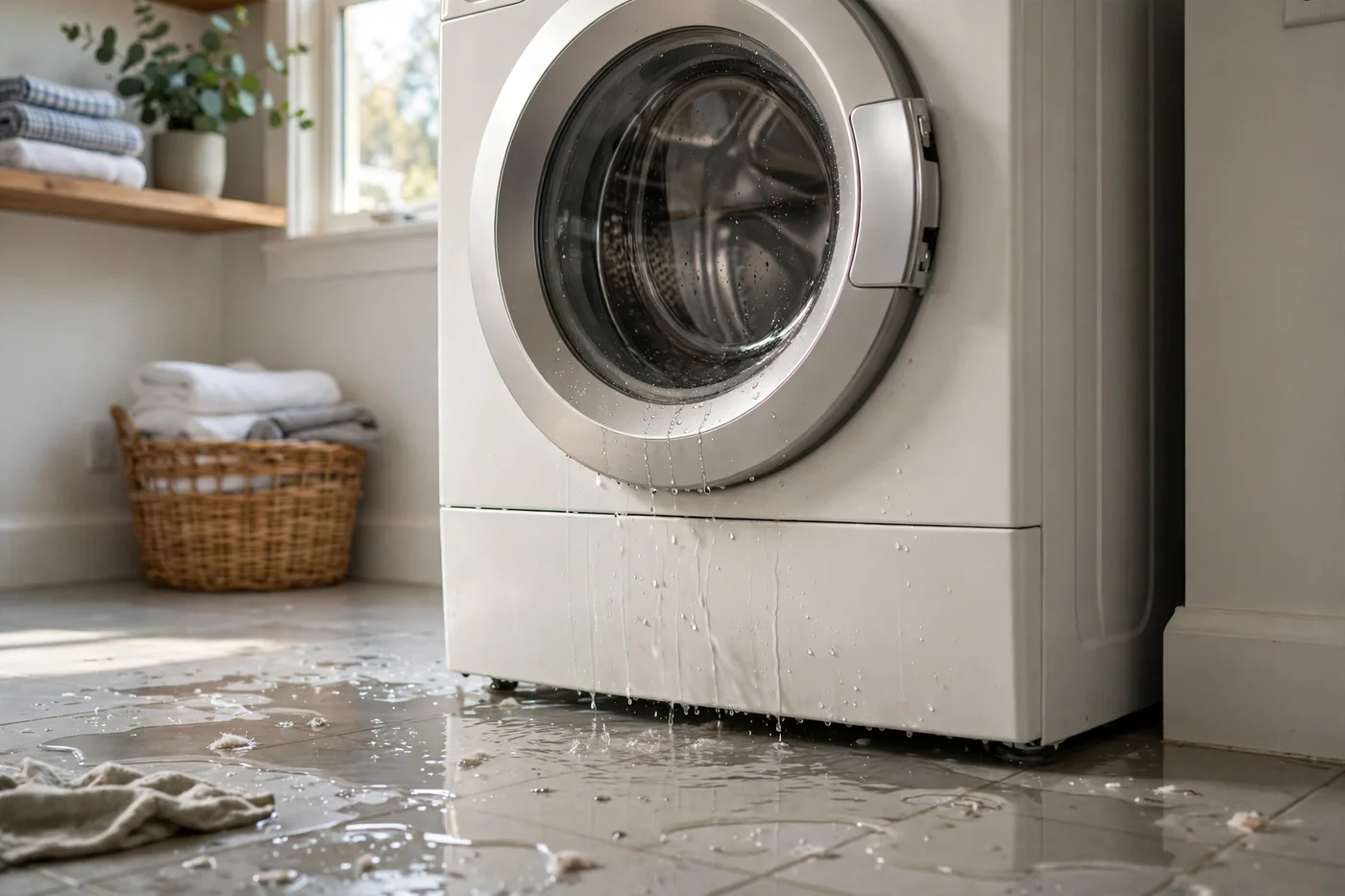
Most people describe their problem the same way: "it won't drain," "it takes two cycles," "it smells like something's burning." This hub translates those everyday descriptions into likely causes, the safe checks you can do yourself, and the moment to pick up the phone. Click any card for the full repair page.
Clarksville city water runs moderately hard (about 97 mg/L, roughly 6 grains per gallon), which can leave scale in inlet valves and residue on door seals over time. Homes on private wells around rural-edge Woodlawn can see harder water, so mineral buildup shows up sooner there. Watch for:
Usually a clogged or failing drain pump, or a blocked drain hose. You can check the hose for kinks and clean the pump filter if your model has one. Standing water that will not move at all means call.
Drain pump repair →Often an out-of-balance load, a bad lid switch or lid lock, or a worn belt or actuator. Redistribute the clothes and try a spin-only cycle. Clothes still soaking wet points to a part failure.
Spin problem repair →Check supply hoses, clamps, and the door seal for cracks or debris. Small leaks get worse and water near electrical parts is a hazard, so do not just mop it up and hope. Call sooner rather than later.
Leak repair →A banging load is usually unbalanced, but shaking that walks the machine across the floor can mean worn suspension rods, shocks, or drum bearings. Rebalance and re-level first; if it still dances, stop using it.
Vibration repair →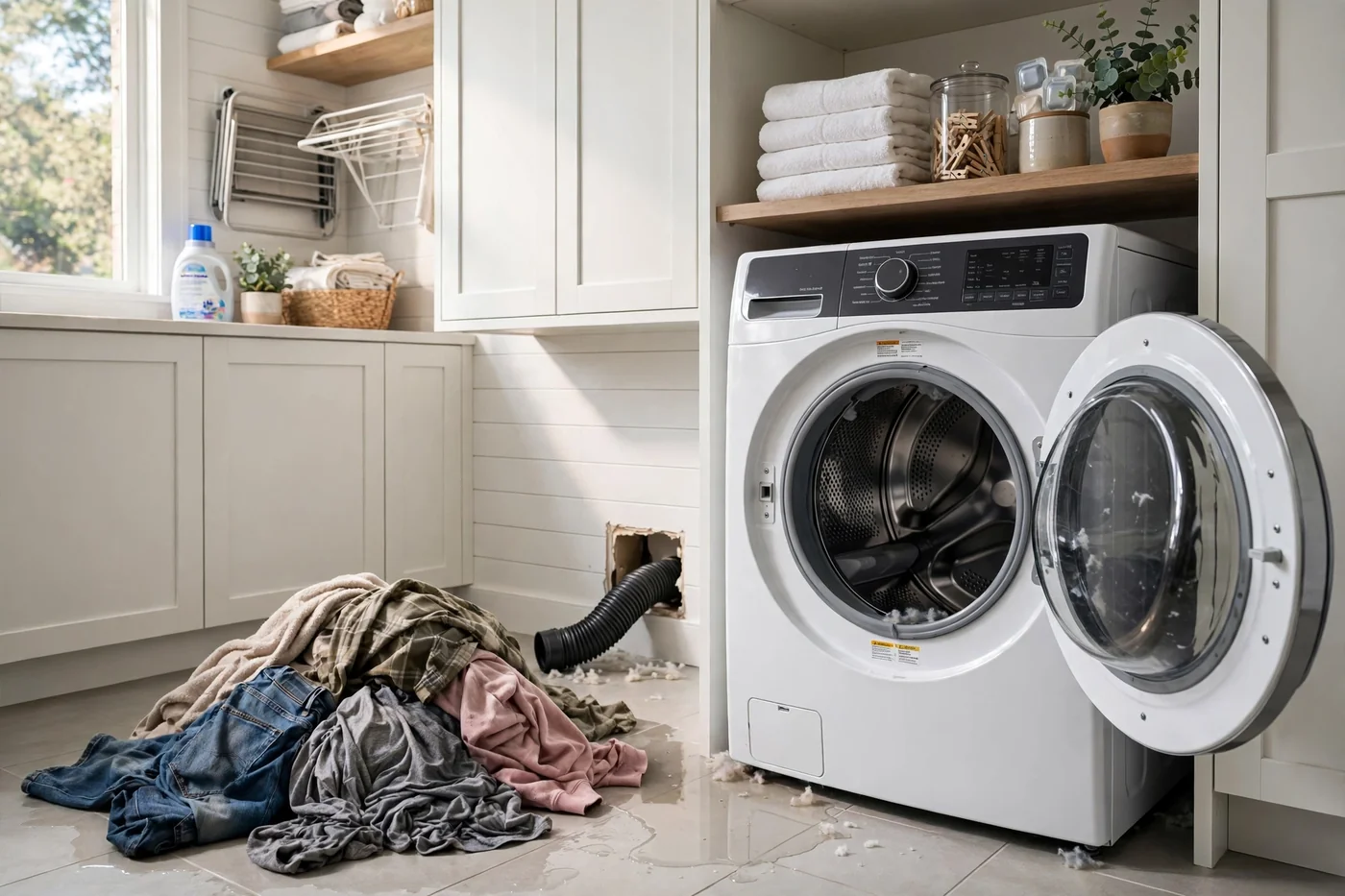
Long dry times are the complaint we hear most in summer, when Tennessee humidity makes every damp load feel worse. More importantly, a vent that is not moving air is a safety issue: the National Fire Protection Association reports roughly 15,970 home fires a year involving a clothes dryer or washing machine nationally, with dryers involved in the vast majority and failure to clean as the leading cause. Dryer vent care is not just about your electric bill (their research report (PDF) has the full figures).
Nearly always restricted airflow from a clogged vent or lint system, sometimes a weak heating element. Clean the lint screen and check the outside vent cap. If two cycles still do not finish the job, the vent needs professional cleaning.
Vent cleaning →Electric dryers usually point to a failed heating element or a blown thermal fuse; gas dryers to the igniter or flame sensor. A cold drum after a full cycle is not a setting problem. It needs diagnosis.
No-heat repair →If you hear the motor hum but nothing tumbles, the drum belt has usually snapped. If there is no sound at all, it could be the motor, door switch, or start switch. Belt jobs are among the most straightforward repairs.
Drum & belt repair →A screech or thump-thump that repeats with each drum rotation is classic worn drum rollers or an idler pulley. It gets louder over time and can take the belt with it, so do not run it for months.
Dryer repair →Stop the machine and do not run it again until it is checked. It can be lint on the heating element, a slipping belt, or an electrical problem. If you see smoke, call 911 first, then call us.
Emergency service →Washers in unheated garages and exterior laundry rooms suffer in our cold snaps. January lows in the 20s, and the occasional stretch near 15°F, can freeze supply lines and burst hoses. In summer, damp river-lowland laundry rooms encourage musty front-load odor. Both seasons give you free reasons to look behind your machines twice a year.
Want the deeper dive on any of these? See why your washer won't drain, why your dryer takes forever to dry, and washer banging noise causes on the blog. When you are ready for a diagnosis, our repair process walks you through exactly what a visit looks like.
Start simple: rebalance or reduce the load, because an out-of-balance load is the most common reason a machine pauses. Check that the lid or door is fully closed and the drain hose is not kinked or pushed too far into the standpipe. If it keeps stopping in the same spot, you likely have a failing part, such as a lid switch, water inlet valve, or control issue, and a technician should look at it.
It is common, but it is not something you have to live with. The odor comes from mildew growing on the door gasket and in the tub, especially in humid homes. Leave the door ajar between loads, run a hot cleaning cycle with a washer cleaner, and wipe the gasket. If the smell persists, the gasket may need replacement.
You should not ignore it. Two-cycle drying almost always means restricted airflow, usually a clogged vent or lint buildup, or a heating problem. It wastes energy, wears out your clothes, and a clogged vent is a documented fire risk. Clean the lint screen and the outside vent cap, then schedule a vent check if drying does not improve.
Treat any leak as worth investigating quickly. Small leaks rarely stay small: supply hoses, inlet valves, and door seals tend to get worse, and water near electrical parts is a real hazard. Turn off the supply valves if you are unsure, move anything valuable away from the machine, and call for service.
Stop the machine and call if you hear grinding, loud squealing, a burning smell, or banging so violent the machine moves. These point to broken belts, worn drum rollers, bad bearings, or a failing motor, and running the machine can turn a moderate repair into a bigger one.
Clarksville Washers Repair Pro
Plain-language explanation, firm upfront price, and the machine tested through a full cycle before we leave.