The Fire Risk Hiding in Your Laundry Room
Dryer vent fires are preventable, and almost all of them trace back to lint nobody cleaned out. Here is what the national data says and what to do about it in your Clarksville home.
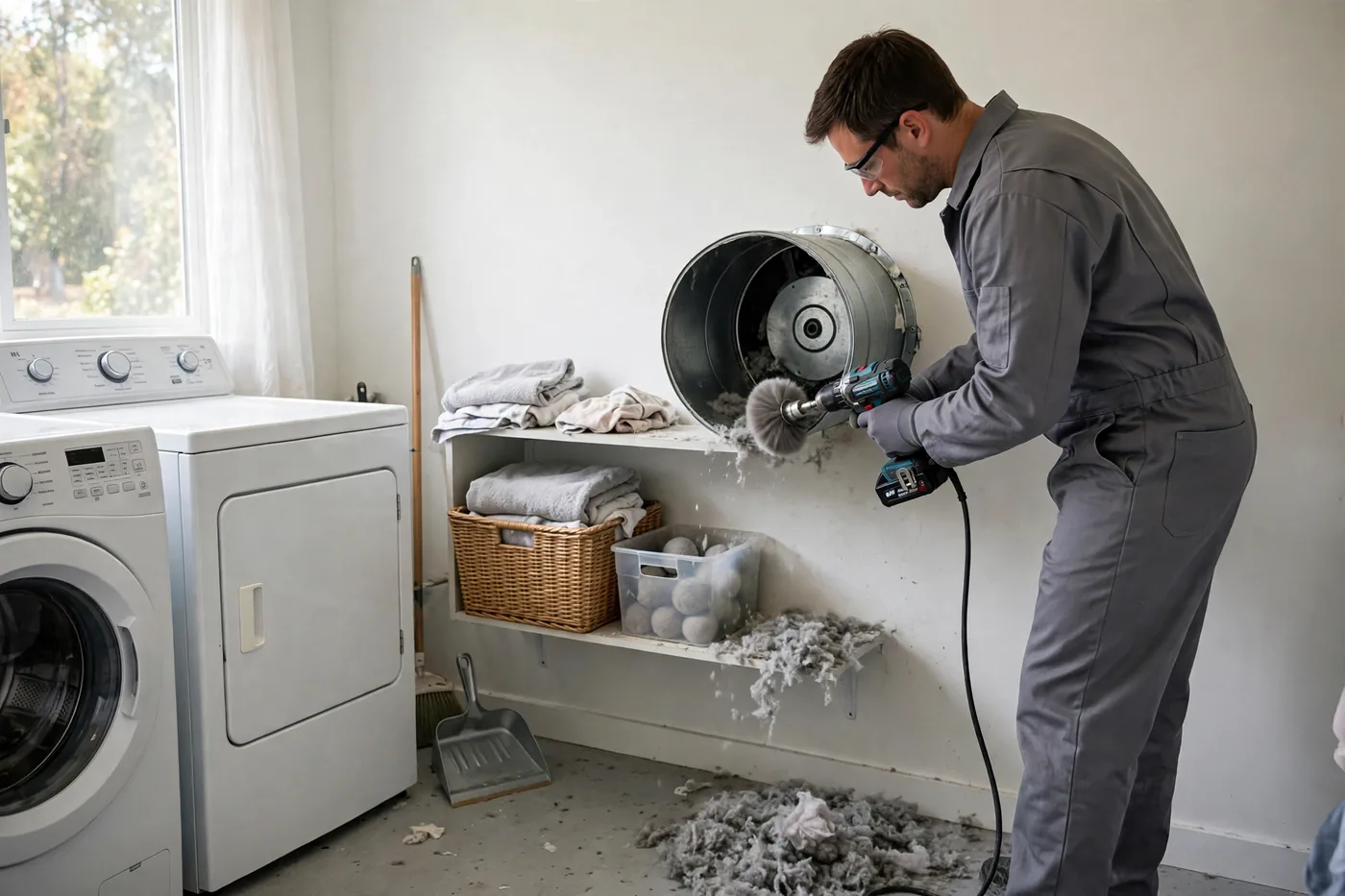
A clothes dryer is a box that makes heat, tumbles fabric, and pushes out lint. When the lint has nowhere to go, heat builds up inside the machine until something ignites. That is the entire fire story in one paragraph, and it is why the vent matters as much as the machine.
What the national numbers say
National Fire Protection Association research puts the annual national average at about 15,970 home fires involving a clothes dryer or washing machine, with the vast majority: 92%: involving dryers. Those fires cause roughly 13 deaths, 444 injuries, and $238 million in direct property damage each year. And the leading cause? About one-third (32%) of dryer fires are attributed to failure to clean. In NFPA's detailed breakdown, the item first ignited was dust, fiber, or lint in 27% of dryer fires. (All national figures; no Clarksville-specific fire counts exist.)
The U.S. Fire Administration tracks clothes dryer fires in residential buildings in its statistical reports, and its fire safety guidance is plain: "Clean lint filters every time you use the dryer. Clean the dryer vent ductwork every year." That line comes from their basement and garage fire safety page, and it is the single most important sentence on this page.
Why Clarksville's older homes deserve extra attention
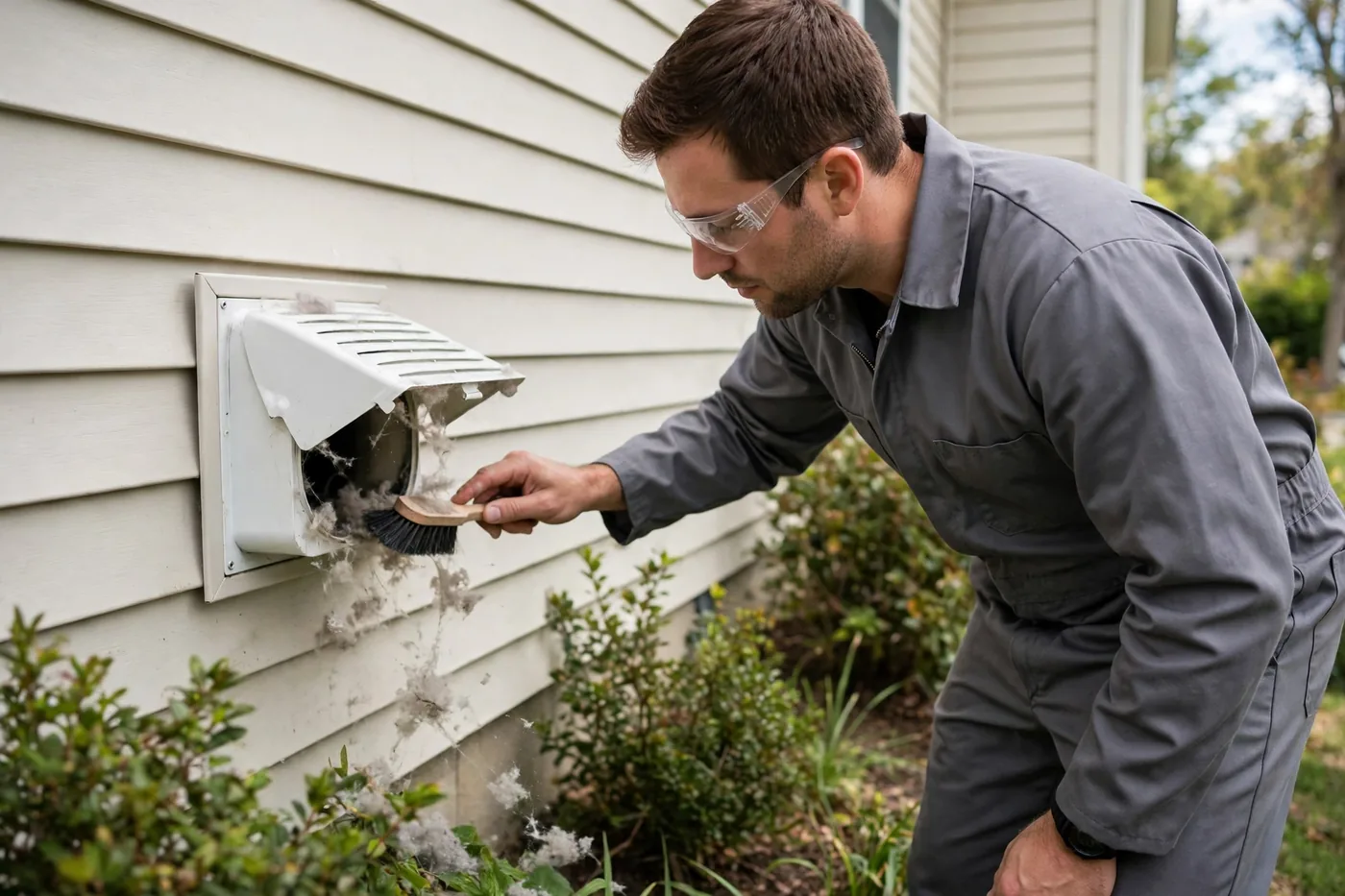
Newer subdivisions in Sango and Rossview were built with short, direct vent runs. Older housing stock is a different story. Historic homes around downtown Clarksville and the older homes in New Providence often have longer or more convoluted vent runs: more elbows, more length, more places for lint to settle. A long run also means a DIY brush kit often cannot reach the whole thing, and some older homes still have the white plastic or thin foil accordion ducting that fire agencies and every manufacturer warn against. If your dryer is in one of these homes and it takes two cycles to dry, the vent is telling you something.
Clarksville note
Dryers in second-floor laundry rooms and interior closets: common in newer builds: vent through longer runs with more turns than a garage-wall exit. If your laundry room is in the middle of the house, your vent needs professional attention more often, not less.
The prevention list that actually works
No gadgets, no gimmicks. These are the habits the U.S. Fire Administration and the NFPA agree on:
- Clean the lint trap every load. Every load, without exception. If the screen feels coated or waxy from dryer sheets, wash it with soap and water: the coating blocks airflow.
- Get the vent professionally cleaned every year. A pro cleaning covers the full run, the transition duct behind the machine, and the exterior hood: the places lint hides that you cannot see.
- Use rigid or semi-rigid metal ducting only. Replace any white plastic or thin foil accordion duct. Metal does not burn, does not sag, and does not trap lint the way flexible duct does.
- Check the exterior flap. Go outside while the dryer runs. The flap should open fully with strong airflow. A flap that barely moves means a clog between the machine and the wall.
- Do not run the dryer when you are asleep or away. U.S. Fire Administration dryer safety guidance includes turning the dryer off if you leave home or go to bed. A fire you are awake for is a 911 call. A fire you sleep through is a tragedy.
- Keep the area around the dryer clear. Lint, cleaning rags, and cardboard boxes do not belong next to a machine that makes heat.
When to call for professional vent cleaning
Call when any of these are true: dry times have gotten longer, the laundry room feels hot and humid during a cycle, the exterior flap barely opens, your dryer shows a vent warning code (LG d80/d90, Whirlpool AF, Samsung tE), it has been more than a year since the last cleaning, or the vent run is long, has multiple turns, or routes through the roof. Our dryer vent cleaning service covers the full run with professional equipment, and our DIY vent cleaning guide walks through what is safe to do yourself.
Fire safety questions
How common are dryer fires, really?
Common enough to take seriously. National Fire Protection Association research puts the national average at about 15,970 home fires per year involving a clothes dryer or washing machine, with 92% of them involving dryers. About a third of dryer fires are attributed to failure to clean. Those are national figures, not Clarksville numbers, but the mechanism is the same in every laundry room.
What does the U.S. Fire Administration recommend for dryer safety?
The U.S. Fire Administration's guidance is direct: clean lint filters every time you use the dryer, and clean the dryer vent ductwork every year. Their safety materials also advise having dryers installed and serviced by a professional, using metal venting, and making sure the outdoor vent flap opens when the dryer runs.
Why are older Clarksville homes at higher vent fire risk?
Older housing stock, like the historic homes around downtown Clarksville and the older homes in New Providence, often has longer or more convoluted vent runs than a modern build. Long runs with multiple turns trap lint faster, dry slower, and are harder to clean with a DIY brush kit. Add any original flexible ducting, and the risk climbs further.
Is it really unsafe to run the dryer while I am asleep or away?
It is. U.S. Fire Administration dryer safety guidance includes turning the dryer off if you leave home or go to bed. A fire that starts in an unattended laundry room gets a head start before anyone notices: and smoke alarms do not help if nobody is awake to hear them.
My dryer shows a d80, d90, or AF code. Is that a fire warning?
Treat it as one. Those codes mean the machine's own sensors have measured a restricted vent: on LG models, d80, d90, and d95 indicate roughly 80, 90, and 95% restriction. At d95, stop using the dryer until the vent is cleared. Use our error code lookup to decode what your brand's display is telling you, then book a professional vent cleaning.
Clarksville Washers Repair Pro
When was your vent last cleaned?
If you have to think about it, it is overdue. Professional vent cleaning for the full run: the single best dryer fire prevention there is. Mon-Fri 7AM-7PM · Sat 8AM-4PM · 24/7 emergency dispatch.