Electric Dryer Service · Clarksville, TN
Electric Dryer Repair in Clarksville, TN
Half-tripped breakers, scorched terminal blocks, and tired 30-amp circuits: we meter the power side first and fix it on the spot, before anyone talks about parts.
Serving Clarksville & Montgomery County · Mon-Fri 7AM-7PM · Sat 8AM-4PM · 24/7 Emergency Line
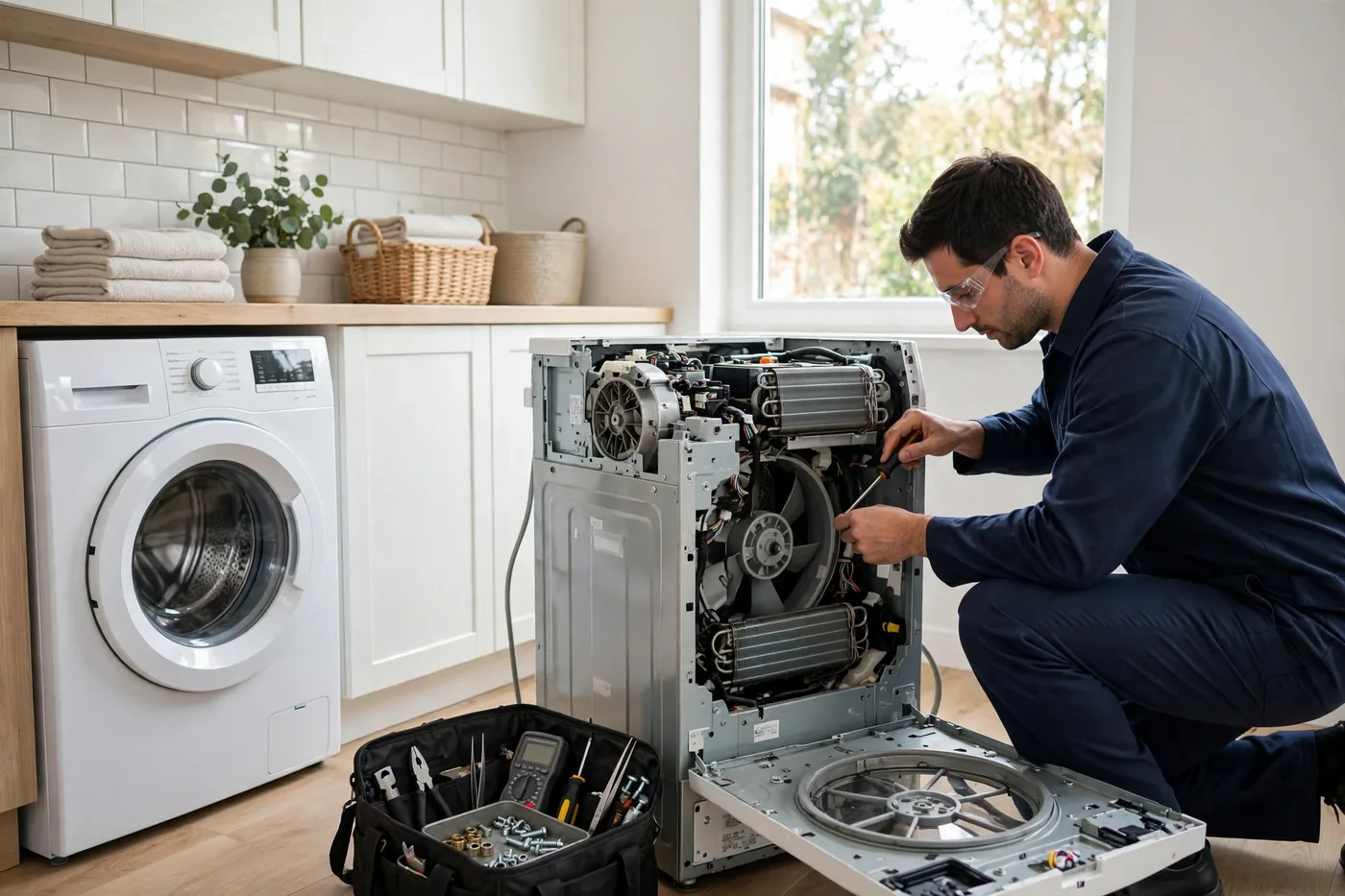
Clarksville Electric Dryer Repair
Before You Blame the Dryer, Check the Power
Short answer: when an electric dryer quits heating, the wall is the first suspect, not the machine. A half-tripped double-pole breaker can leave the motor happily running on 120 volts while the heater starves for the 240 it needs. We meter the circuit first, because no part inside the dryer ever fixed a bad breaker.
Electric dryers are the majority of what we service around Clarksville, and CDE Lightband customers deal with the same quirk every winter: freezing-rain and ice events that cause flickers and surges. Surges rarely kill a dryer outright, but they stress panels and loosen connections that were already marginal. After a winter with outages, we see a wave of "it worked fine until the power went out" calls.
The other pattern we see is the panel itself aging. In older homes, breakers get tired, lugs corrode, and receptacles wear loose after decades of heat cycles. A dryer that fades over months, or one that quits right after a storm, is often telling you about the house wiring, not the appliance. One safe reset you can try yourself: switch the dryer breaker fully off, then back on. If it heats again, great. If it trips again, stop resetting it and call us.
What Our Power-Side Visit Checks
- Both legs of the 240V supply at the breaker and at the outlet, measured with a meter
- The 30-amp receptacle for wear, looseness, and heat discoloration
- Power cord and plug prongs for melting, looseness, or damage
- Terminal block inside the dryer for scorching or loose lugs
- Panel condition and breaker age, especially in older homes
If the whole power side tests healthy, we say so plainly and move to the machine itself with our full no-heat dryer checklist, which covers the heat parts in the order we test them. You never pay for a power-side visit that turns into a parts guessing game.
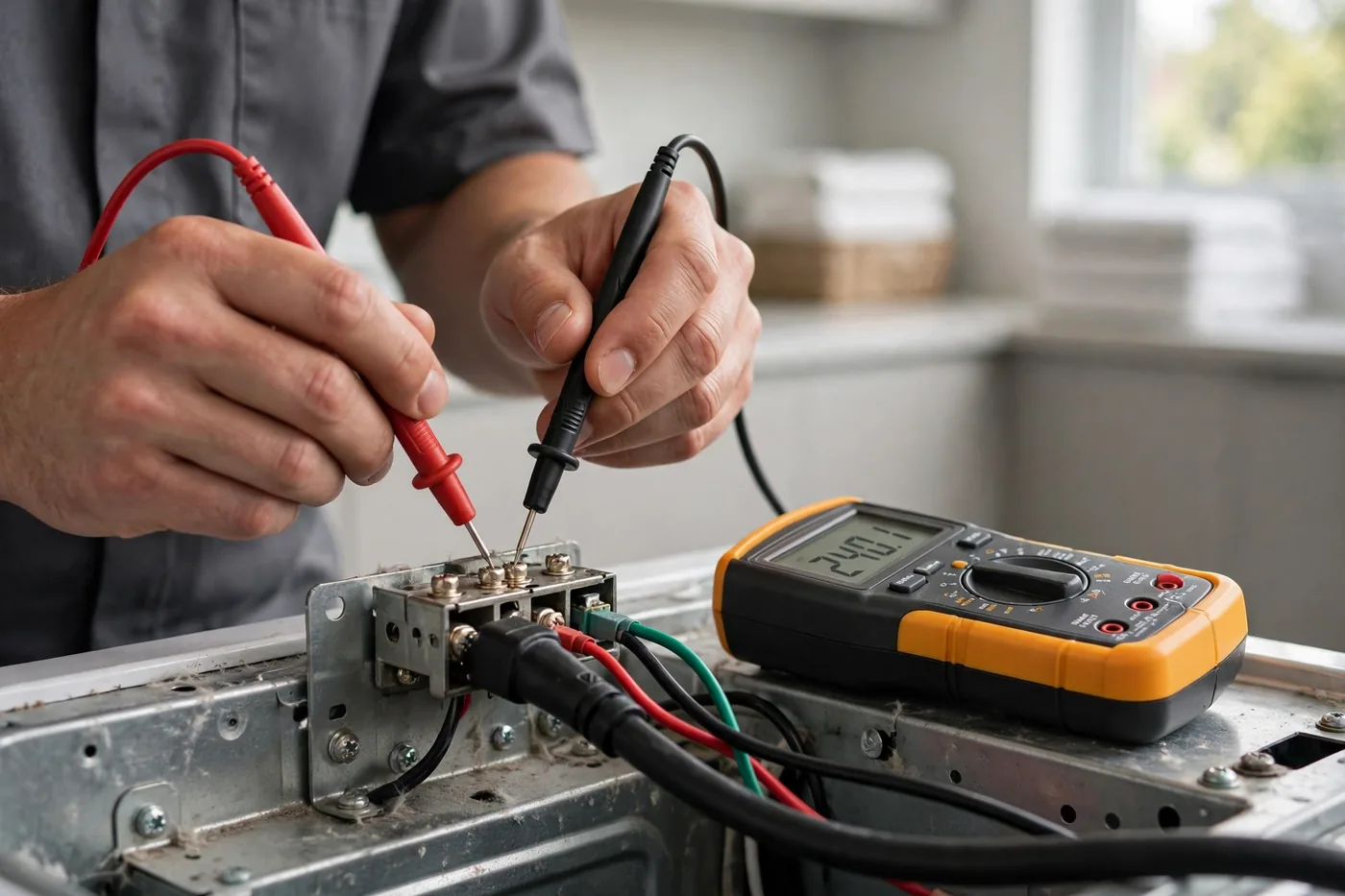
Here's a practical Clarksville note: in older homes around New Providence and historic downtown near Franklin Street, the dryer's 30-amp circuit may be decades old. Corroded lugs and tired breakers show up more often in these homes than in newer builds. If your panel looks its age and the dryer breaker has tripped before, tell us when you call. It changes where we look first. For more on how electric dryers are built and rated, AHAM, the home appliance manufacturers association, and ENERGY STAR's clothes dryer listings are worth a look.
We work on most major electric dryer makes, including Whirlpool, Maytag, GE, Samsung, LG, Kenmore, Frigidaire, Electrolux, Bosch, Speed Queen, and Amana. We're an independent shop, not an authorized dealer for any of them, so the diagnosis stands on its own merits.
Don't Ignore These
Electric Dryer Warning Signs
Breaker trips again after a reset
One reset is fine. A breaker that trips twice is telling you the circuit is overloaded or failing. Stop resetting it and let us meter the panel before the wiring takes damage.
Scorch marks or a hot smell at the outlet
Discoloration around the receptacle, a plug that feels hot, or a whiff of something burning near the wall means the connection is overheating. Unplug the dryer and call us.
Dryer quits right after a storm
Flickers and surges from winter ice events love to expose weak breakers and loose lugs. If the timeline lines up with an outage, start at the panel, not the parts shelf.
Upfront & Simple
How We Diagnose a Power Problem
Meter the circuit
We measure both legs of the 240V supply at the outlet and the breaker. A half-tripped leg gets caught instead of missed.
Inspect cord and connections
Receptacle, plug prongs, and the terminal block get a close look for scorching, looseness, and wear.
Read the panel
Breaker age and panel condition tell us whether this is a one-off trip or a circuit asking for retirement.
Quote, repair, prove
Firm price before work. Repair completed, then we verify full voltage at the dryer before we leave.
Why Clarksville Calls Us
Live-Circuit Testing, Done Safely and Right
We actually meter the power
A glance at the breaker isn't a test. We measure voltage at the outlet and the terminal block, so a half-tripped leg gets caught instead of missed.
Power problems fixed at the source
A new breaker, a fresh receptacle, or a repaired terminal block solves the actual failure instead of masking it with parts.
Honest handoff when it's not the power
If the circuit tests healthy, we say so and point you at the real culprit instead of selling you parts you don't need.
Honest Pricing
The Power-Side Culprits We Find
When the wall is the problem, it is almost always one of these. This is the order we check them in:
| Culprit | What failure looks like | How we check it |
|---|---|---|
| Double-pole breaker | One leg trips; the dryer tumbles on 120V with zero heat | Meter both legs at the outlet under no load |
| 30-amp receptacle | Worn slots, loose grip on the plug, or heat discoloration | Visual inspection; check plug fit and wire condition |
| Power cord | Melted plug end, loose prongs, or damaged insulation | Visual and continuity check of the full cord |
| Terminal block | Scorched screws or loose lugs where the cord meets the dryer | Visual inspection; check lug torque and wire condition |
Pricing works the way it does on every visit: we quote your specific repair after diagnosis, and you approve it before work starts. Power-side fixes are usually among the simpler jobs: a breaker, a cord, or a terminal block. If the trouble turns out to be deeper inside the machine, our cost guide explains what pushes a repair toward the simple or the pricey end.

Across Clarksville & Montgomery County
Electric Dryer Repair Across Town
New Providence
The historic community northwest of downtown toward the Cumberland River, with older residential character. Older panels and older 30-amp dryer circuits are common here, so breaker and terminal-block checks are part of every visit.
Downtown Clarksville
Historic homes near Franklin Street, many rebuilt after the January 1999 tornado. Wiring vintages vary house to house, and we've seen everything from original panels to full rewires. We meter the circuit either way.
Rossview
The I-24 growth corridor with newer construction and modern panels. Power problems are rarer here, but ice-storm outages after winter storms keep us busy with control boards and weakened connections.
Good To Know
Electric Dryer Repair FAQs
Why does my electric dryer run but not heat?
In electric dryers, the motor runs on 120 volts but the heating element needs the full 240. A half-tripped double-pole breaker can knock out one leg, leaving the drum turning with no heat. Other common causes: a burned terminal block where the cord connects, a failed heating element, a blown thermal fuse, or a weak cycling thermostat. We meter the circuit to find which one it is.
Can a tripped breaker really cause my dryer to lose heat but keep running?
Yes, and it's more common than people expect. Electric dryers run on a double-pole breaker (two linked 30-amp poles). If one pole trips and the other holds, the motor can still get its 120 volts and tumble the drum while the heating element loses its 240-volt supply. The breaker handle doesn't always look fully tripped, which is why we check both legs with a meter instead of trusting a glance at the panel.
Is it safe to reset the dryer breaker myself?
Resetting the breaker once is something most homeowners can do safely: switch it fully off, then back on. If the dryer heats again, great. But if it trips again, stop resetting it and call us or an electrician. Repeated tripping is the breaker's way of telling you something is wrong, and forcing power through a failing circuit is how cords and terminal blocks overheat.
Why does my electric dryer take longer to dry than it used to?
Heat fades gradually in electric dryers for two main reasons: the heating element can sag, develop hot spots, or partially short, reducing its output, and restricted vent airflow makes whatever heat you have work less efficiently. A lazy cycling thermostat can add to the problem. We test the element and the airflow before replacing anything, because a $0 vent problem doesn't need a new element.
Do electric dryers really need 240 volts?
Yes. Full-size electric dryers in the US are wired for 240 volts: the heating element needs the full 240 to make heat, while the motor and controls run on 120 volts tapped off one leg. That's why an electric dryer can appear to work (it turns, it counts down) while producing no heat at all: it's getting 120 but not 240. Your outlet should be a large four-prong (or older three-prong) 30-amp receptacle.
Should I repair or replace my aging electric dryer?
We use the 50% rule as a starting point: if the repair costs more than half of a comparable new dryer, replacement is usually the smarter buy. Electric dryers typically last about 13 to 14 years. A mid-life dryer with a failed element or thermostat is usually worth fixing. A 12-year-old machine that has already needed the belt and the rollers, and now needs an element plus a board, probably isn't. We'll give you our straight opinion either way.
Comparing repair to replacement? Read repair vs. replace: the real math for washers and dryers.
Clarksville Washers Repair Pro
Electric Dryer Cold? We'll Find the Break in the Circuit.
Power first, parts second. One visit usually settles an electric no-heat problem.